
Systems & Strategy
The depth beneath the war
An economy of workers and nodes, a deterministic combat engine, an open galaxy map, and a victory that no one wins alone. This is how Veyrasol actually plays.
01 /The Economy
Five resources, one constraint
Four are pulled from the nodes around your worlds; one comes only from trade. Your true ceiling is never the map — it is how many mouths you can feed. The rare Ancient Crystal / Ezeli Kristali sits apart: it buys prestige, never raw power.

Durium
The old empire’s standard build alloy; every structure begins with it.

Titanium
Refined heavy armor and structural metal; the mid-to-late bottleneck. Aegis’s favored resource.

Tylium
Hyperdrive fuel and weapon energy at once — the most fought-over resource. Vanguard’s fuel.

Ration
Hydroponic food and life-support; it feeds your population and your crews.

Credit
The one surviving common currency; it flows from trade and the exchange, never from mines. Concord’s tongue.
Ancient Crystal (Ezeli Kristali) — A rare prestige resource — it buys standing, never raw power.
02 /Worlds & Nodes
The circle that grows
Every planet sits inside an access circle that touches resource nodes graded from tier 1 to tier 8 — the higher the tier, the richer the yield. Four resources are drawn from nodes; Credit is not. Your Command Center widens that circle, reaching new nodes and opening new building plots as it grows.




Expansion buys flexibility, not power
More nodes mean more variety and redundancy, but total output is capped by your colony’s population and worker pool. There is no runaway snowball.
Plots are scarce
Each world offers only so many building slots. What you place — and what you leave out — is a real decision.
Prize spots are contested
Rare tier 5–8 nodes are visible to everyone, so they draw conflict like gravity.
Neighbors by design
With no minimum-distance rule, players colonize shoulder to shoulder and fight resource wars — economic pressure and raids, not razed worlds.
The Hidden Bunker
A protected reserve shields a base slice of your resources from plunder, so raiding stays meaningful without wiping out newcomers.
03 /Buildings
What you raise on the plot
Structures define a colony — its cap, its defenses, its fleets and its industry. The Command Center sits above them all and soft-caps the rest. (The Tylium Well, Hydroponic Farm, Trade Exchange, Morale Center, Command Academy, Range Tower and Siege Workshop fall in line beside them.)
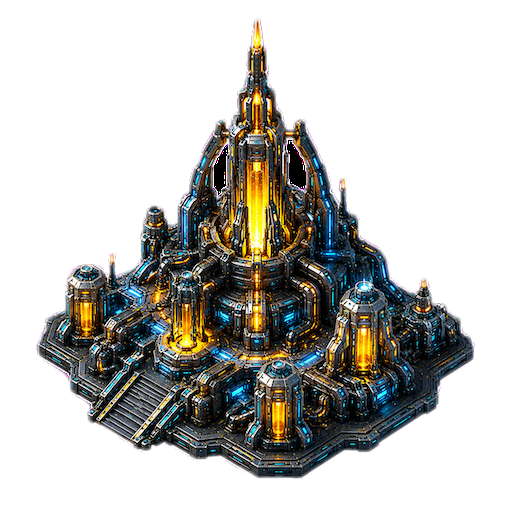
Galactic Beacon
The victory Wonder — built only in the Core.
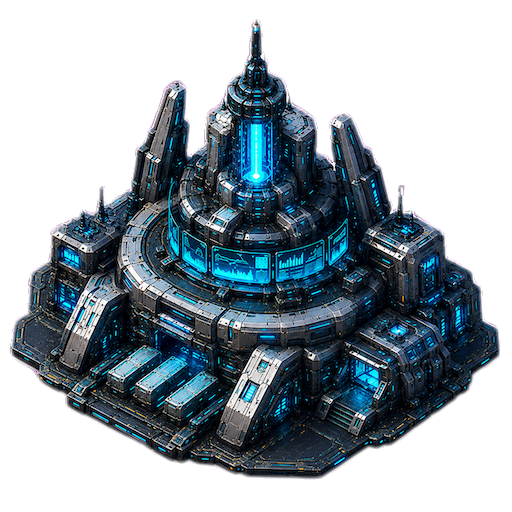
Command Center
The HQ. Sets your population cap, grows the access circle, and soft-caps every other building.
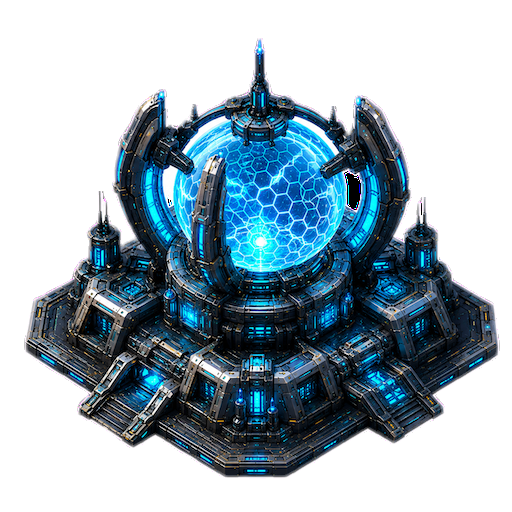
Planetary Shield
The Wall. Multiplies your defense and is the first target in any assault.
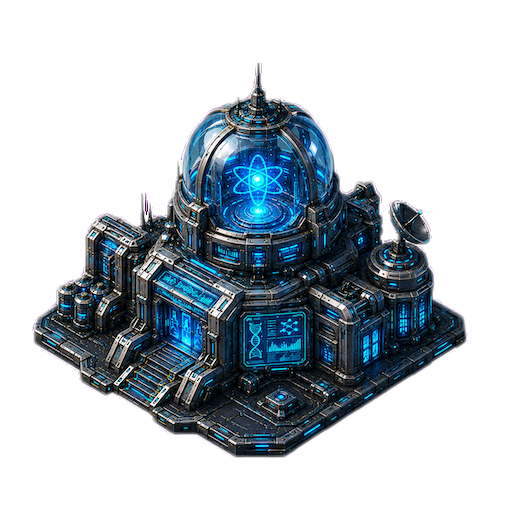
Research Lab
Drives the shared tech tree forward.
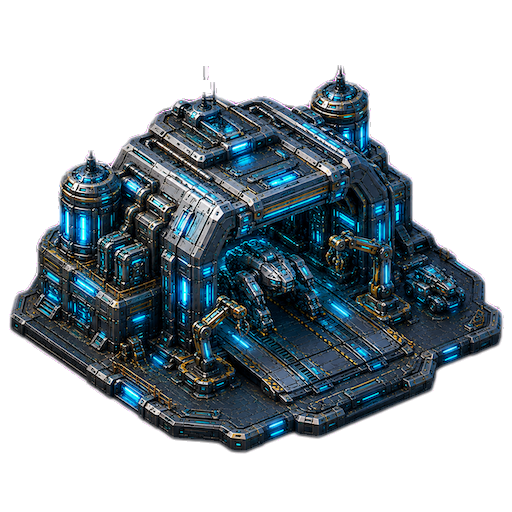
Orbital Shipyard
Builds and berths your fleets.
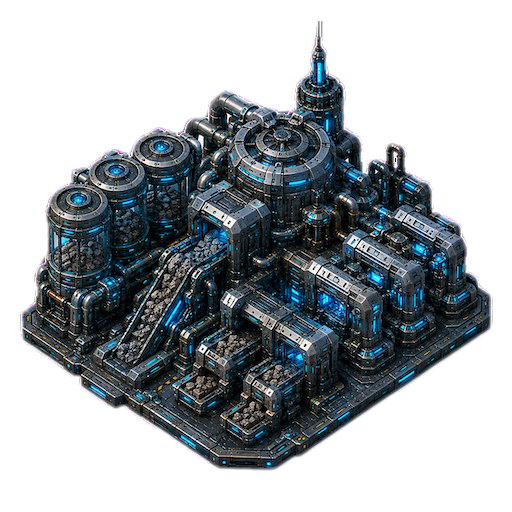
Ore Refinery
Produces Titanium.
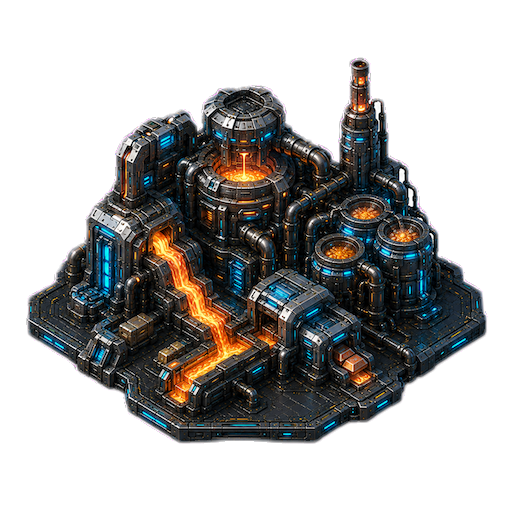
Smelter
Produces Durium.
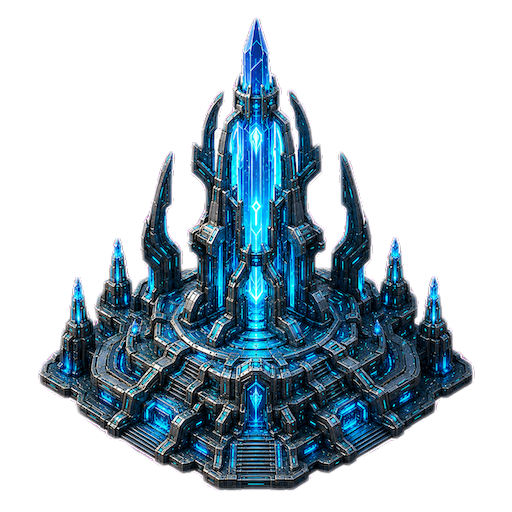
Tylium Well
Extracts Tylium — the galaxy’s fuel and weapon energy.
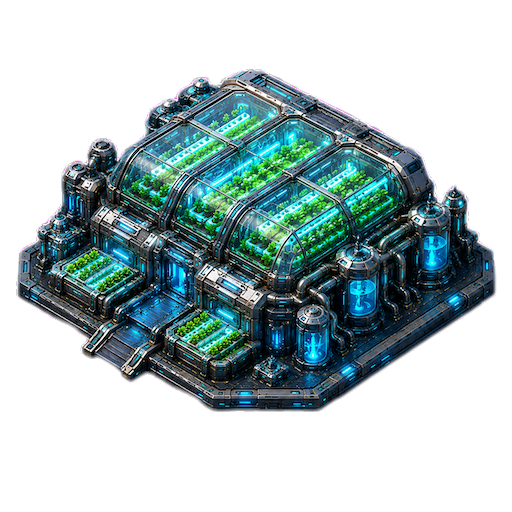
Hydroponic Farm
Produces Ration — feeds your population and your fleet crews.
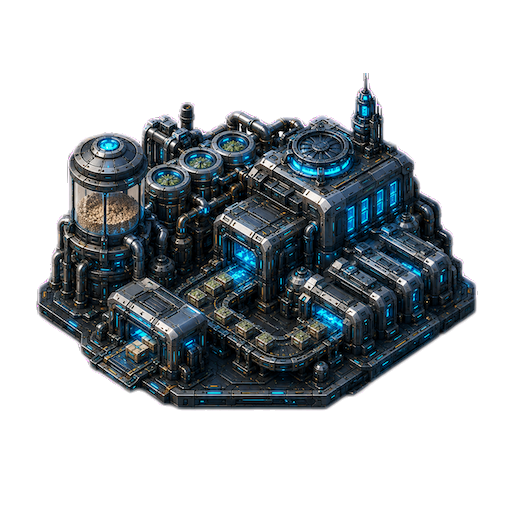
Ration Processing
Refines raw harvest into Ration — feeds your population and crews.
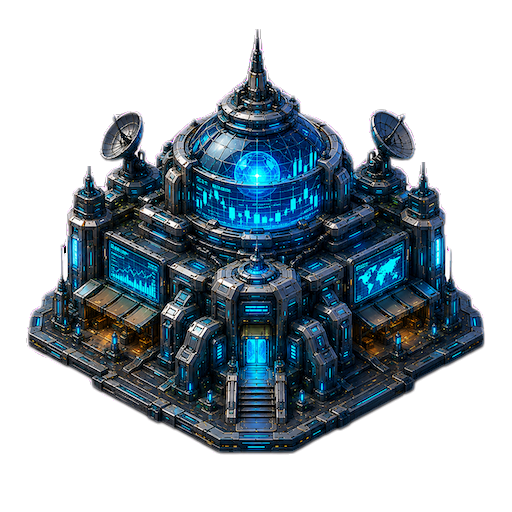
Mech Hangar
Fields your armored units.
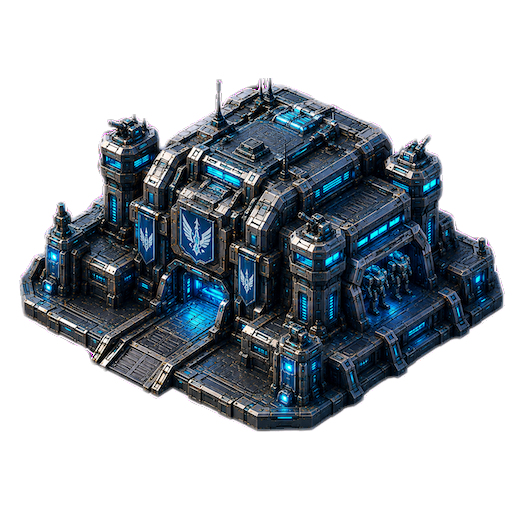
Garrison
Trains and houses your infantry.
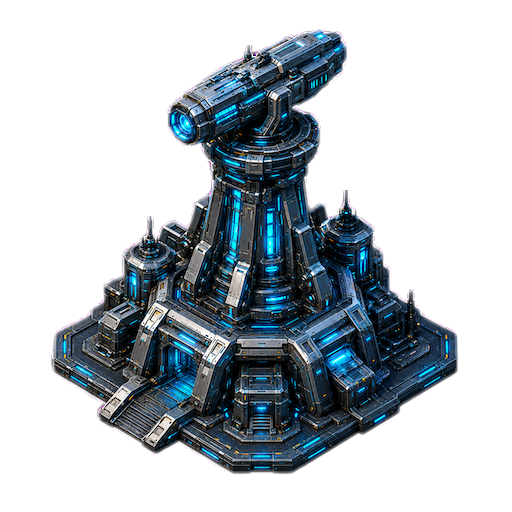
Range Tower
Trains your ranged units.
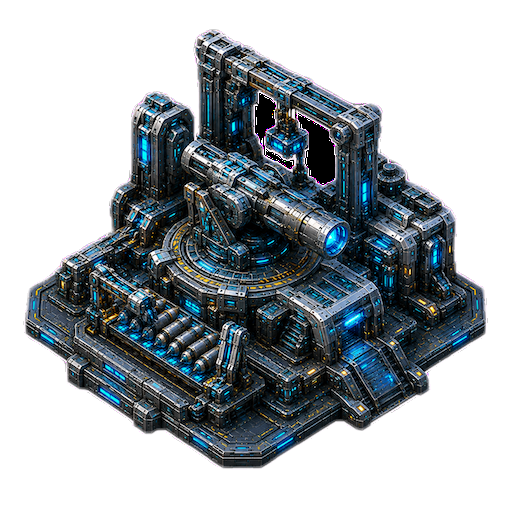
Siege Workshop
Builds your siege units.
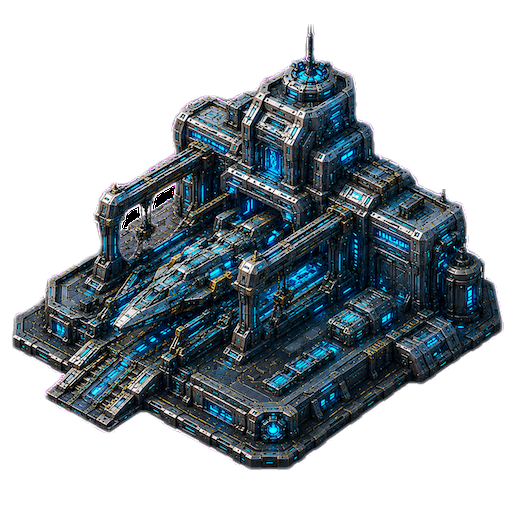
Trade Exchange
The market — a passive stream of Credit from trade.
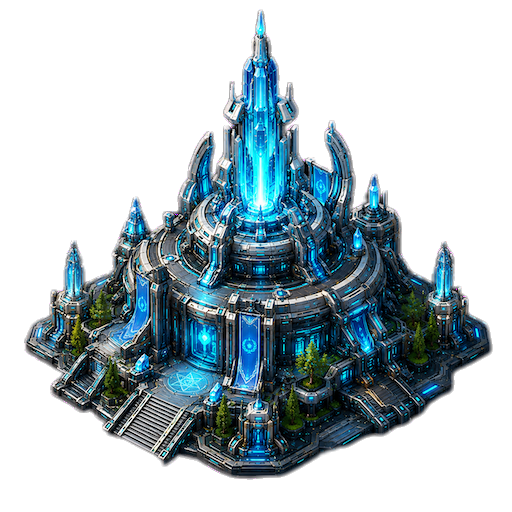
Morale Center
Speeds your population growth.
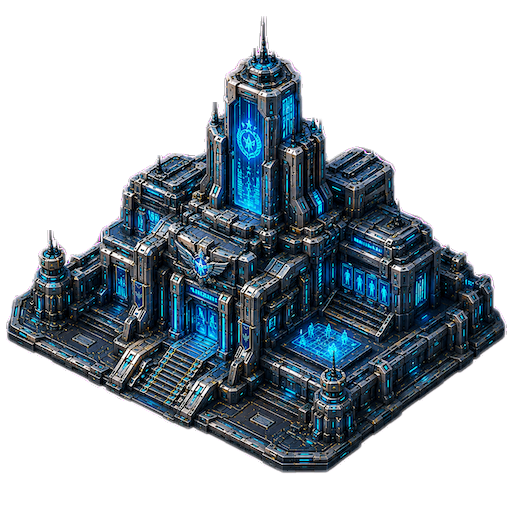
Command Academy
Raises your alliance member cap and member growth.
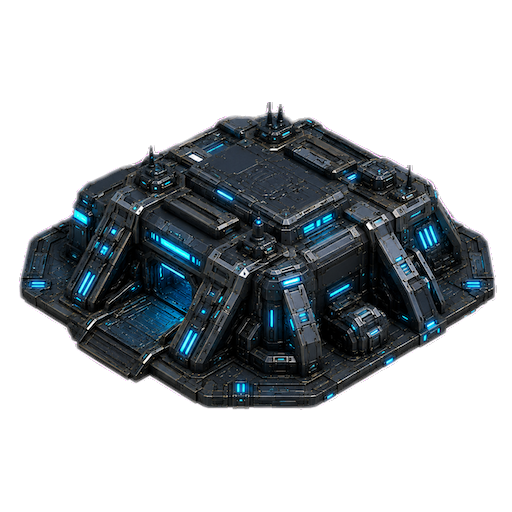
Hidden Bunker
Shields a base slice of your resources from plunder.
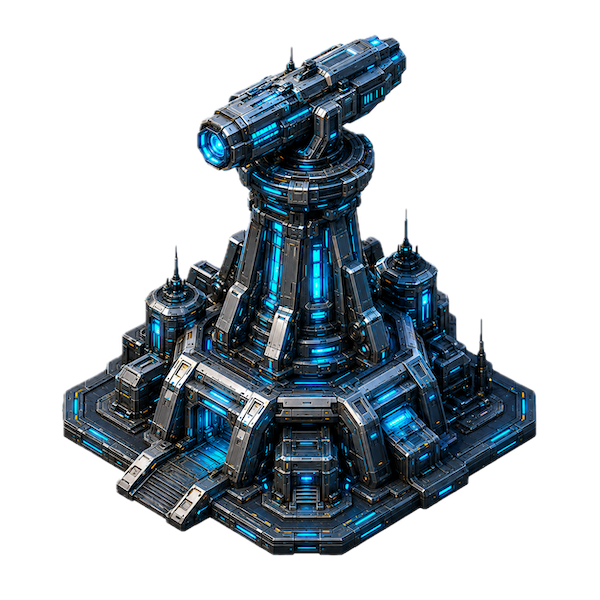
Defense Turret
Orbital and surface batteries — the second line that meets an assault once the Wall is down.
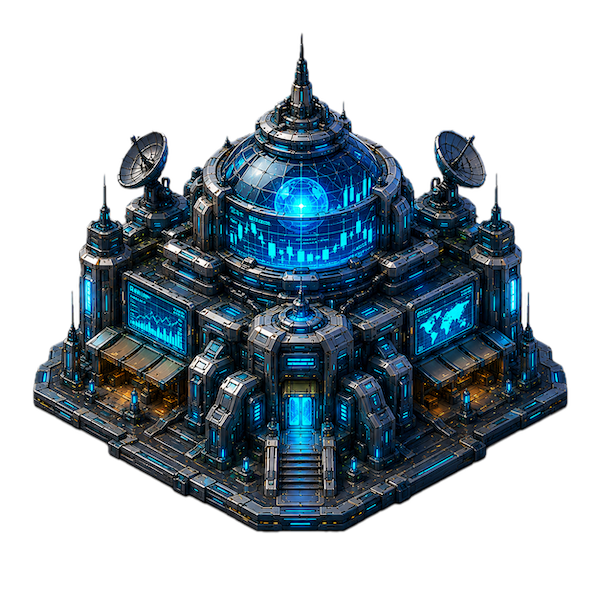
Comms Observatory
Spots inbound fleets early and exposes enemy spy drones.
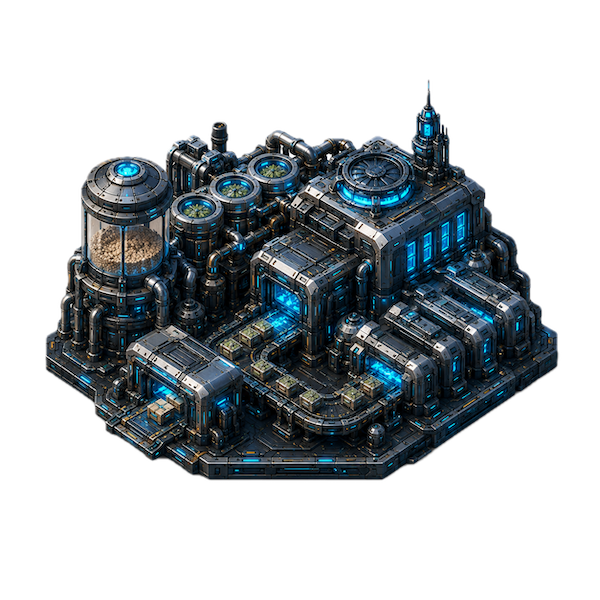
Ore Mine
Extracts raw ore that feeds the refinery and the smelter.
Depot
Raises your resource storage caps.
04 /Units & Fleets
Armies your Ration can feed
Infantry and fleets carry your war — and quality climbs on two axes: building levels unlock variants, while research grants global bonuses and unlocks apex fleets. Army size has no hard cap; it is bounded by cost and by Ration upkeep. Over-extend, and famine slowly takes your cheapest-upkeep units until you rebalance.
- ATKAttack power
- DEF-IDefense against infantry
- DEF-ADefense against armored
- SPDHyperspace travel speed
- CARCargo and loot capacity
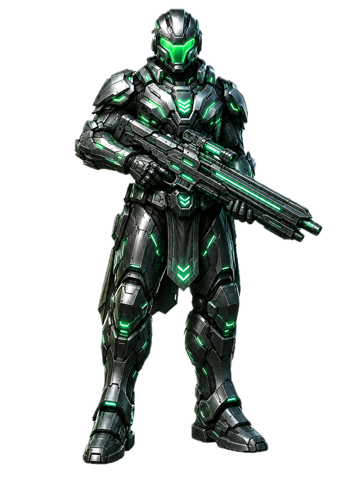
Infantry (Piyade)
Frontline backbone — your answer to enemy infantry.
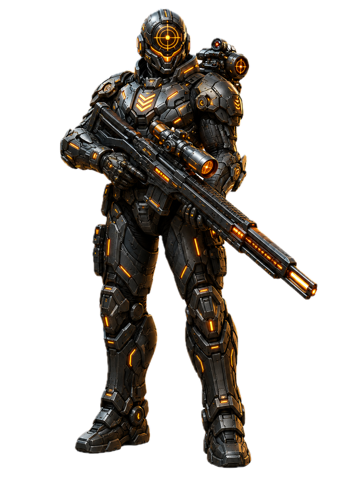
Ranged (Menzilli)
Ion fire support — suppresses from a distance.
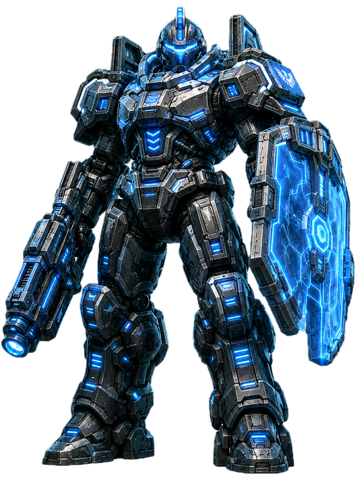
Armored (Zırhlı)
Armored tank — hits hard against armor.

Fleet (Filo)
The core fighting force in space.
- Apex
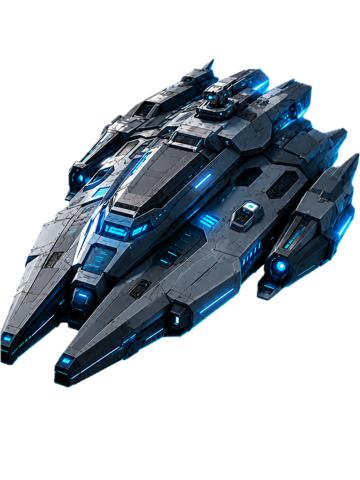
Heavy Fleet (Ağır Filo)
The heavy apex fleet, unlocked by research.
- Flagship

Star Armada (Yıldız Donanması)
The apex capital fleet — the single strongest force of the season.
Reconnaissance

Spy Drone (Casus Droidi)
A recon drone — it never fights; cheaply reveals enemy intel, but risks being caught.
Faction profiles
Every faction profiles the same forces differently: Vanguard hits hardest, Aegis defends best, Concord balances cargo and speed.
Two axes of quality
Building levels unlock basic → veteran → elite variants; research adds global bonuses and unlocks apex units — the Heavy Fleet (Ağır Filo) and the Star Armada (Yıldız Donanması).
Combined arms
A combined Ranged-and-Infantry attack lifts your ranged power — composition is a weapon.
Upkeep is the real cap
There is no army-size limit, only Ration upkeep. Outgrow your food and your cheapest units starve first.
Eyes before fists
A cheap Spy Drone (Casus Droidi) scouts what the map hides — but espionage carries its own risk.
05 /Combat
A battle that always resolves the same way
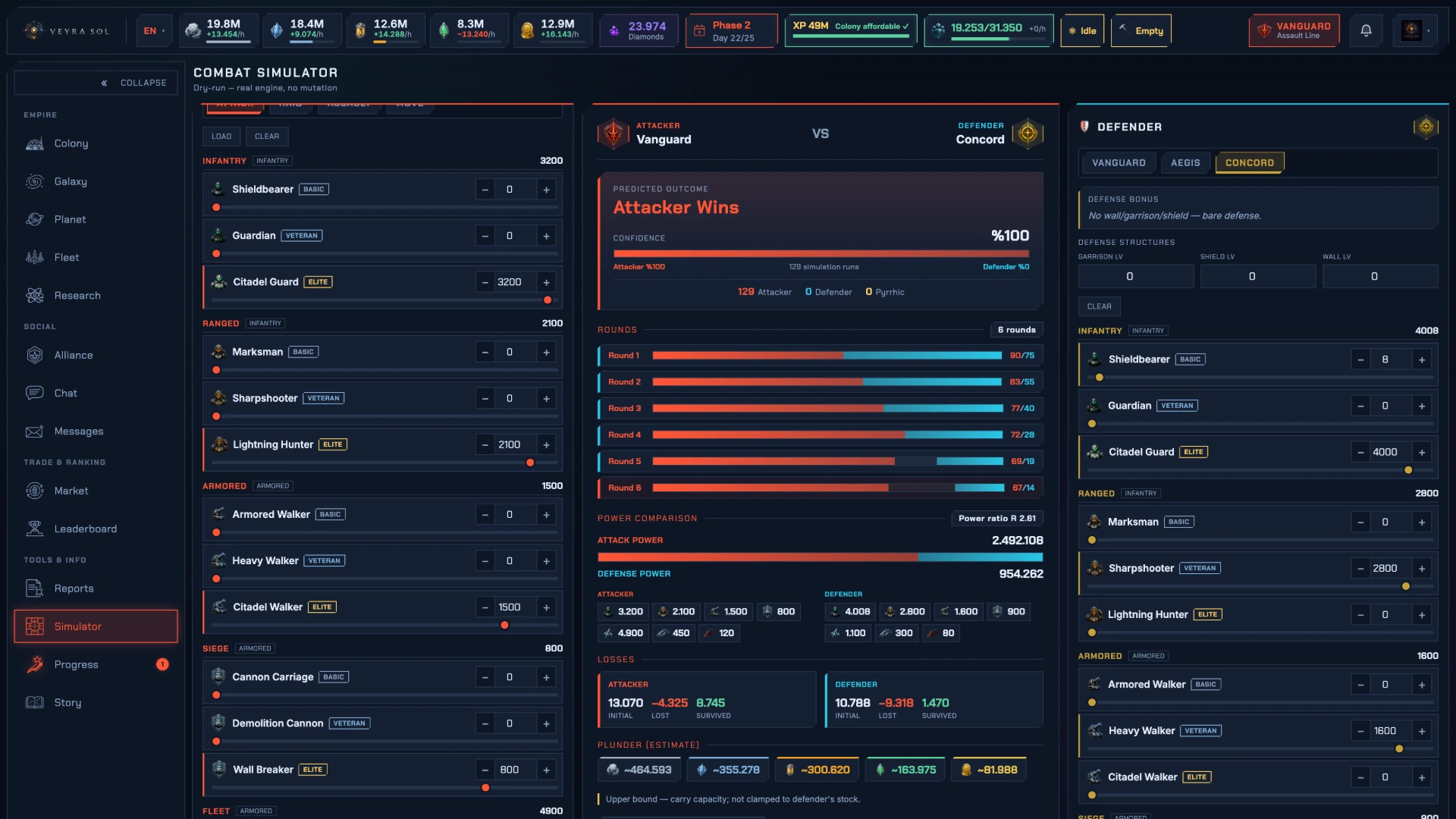
Combat is deterministic, server-authoritative and seeded — the same battle always plays out identically, so there is nothing to cheat on the client. It runs in rounds, and composition decides as much as numbers.
Round-based
Up to six rounds; each inflicts losses in proportion to the power ratio, with only small variance.
The rout threshold
A side that drops below 15% of its starting strength breaks and the battle ends.
Class-matched defense
The defender automatically meets infantry-heavy attacks with DEF-I and armored-heavy ones with DEF-A, so what you bring matters as much as how much.
The Wall counts
A standing Planetary Shield multiplies the defender’s strength.
Three outcomes, one simulator
Attacker win, defender win, or pyrrhic — and a free simulator runs the exact same engine for a no-stakes dry run, pre-fillable from a valid spy report.
06 /The Galaxy Map
An open map, real-time distance
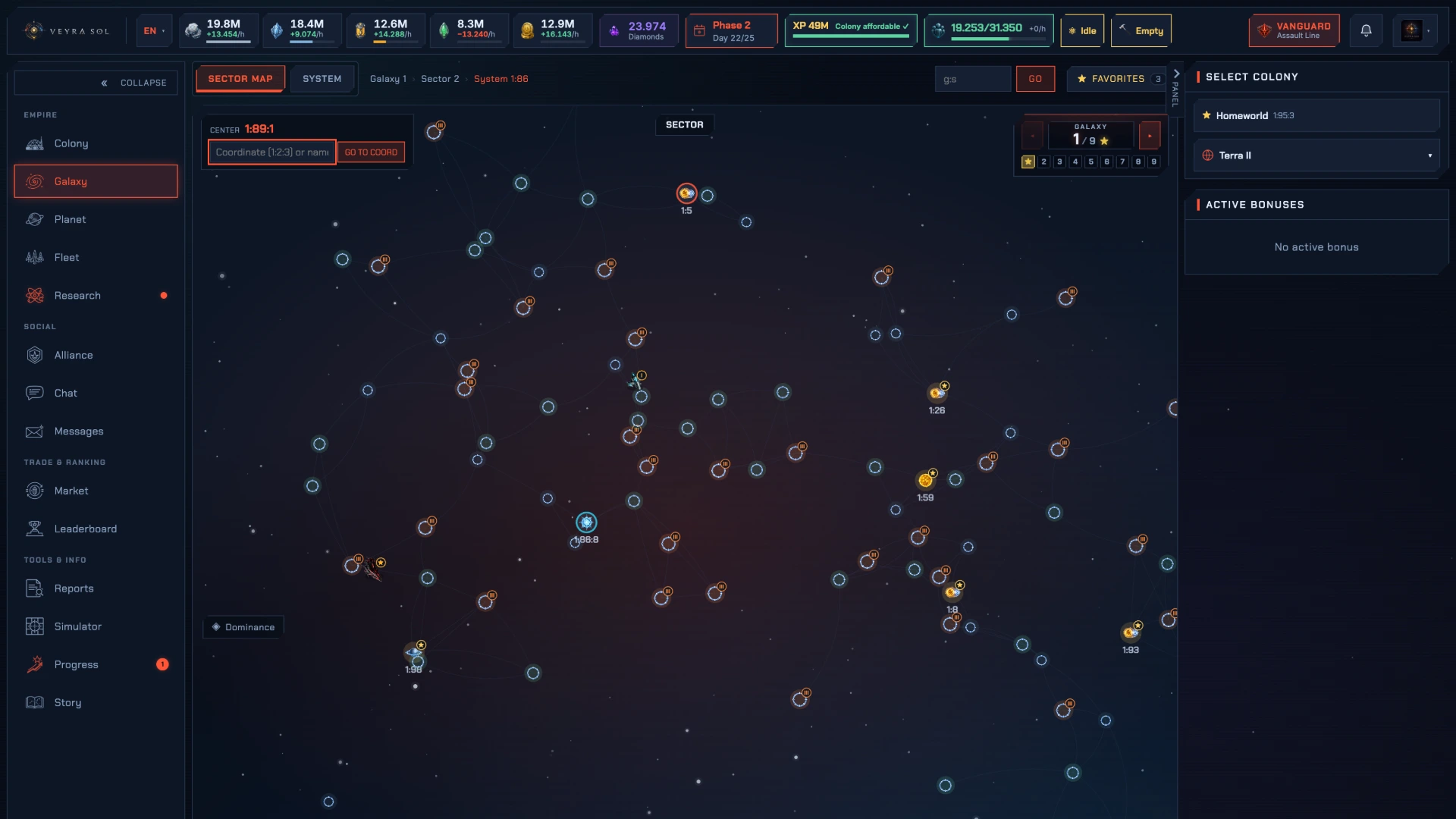
The galaxy nests Galaxy → Sector → Star System → Planet, and a season can hold several galaxies that open as the population grows. There is no fog of war: the static map is open to read, but exact tiers, enemy armies and hidden stats still demand scouting.
Travel takes real time
Hyperspace crossings run on distance divided by your fleet’s slowest ship — and fleets can be recalled within a short window.
Up to ten colonies
Each new world needs a Colony Ship, experience, and the Hyperspace “Colony Protocol” tech.
A fair first city
Your starting world always offers three different resources at mixed low tiers; later colonies land on coordinates you choose.
A seed-fixed galaxy
The map is fixed by seed, so positions are knowable — reading it well is its own advantage.
Defeat is not elimination
Lose a contested world and you relocate and rebuild — never erased.
07 /Research
One tree, every faction
A single shared tech tree spans Economy, Military, Hyperspace and Science. Every faction researches the same tree — only their bonus profiles differ — and filling it out is the work of the mid-to-late season.
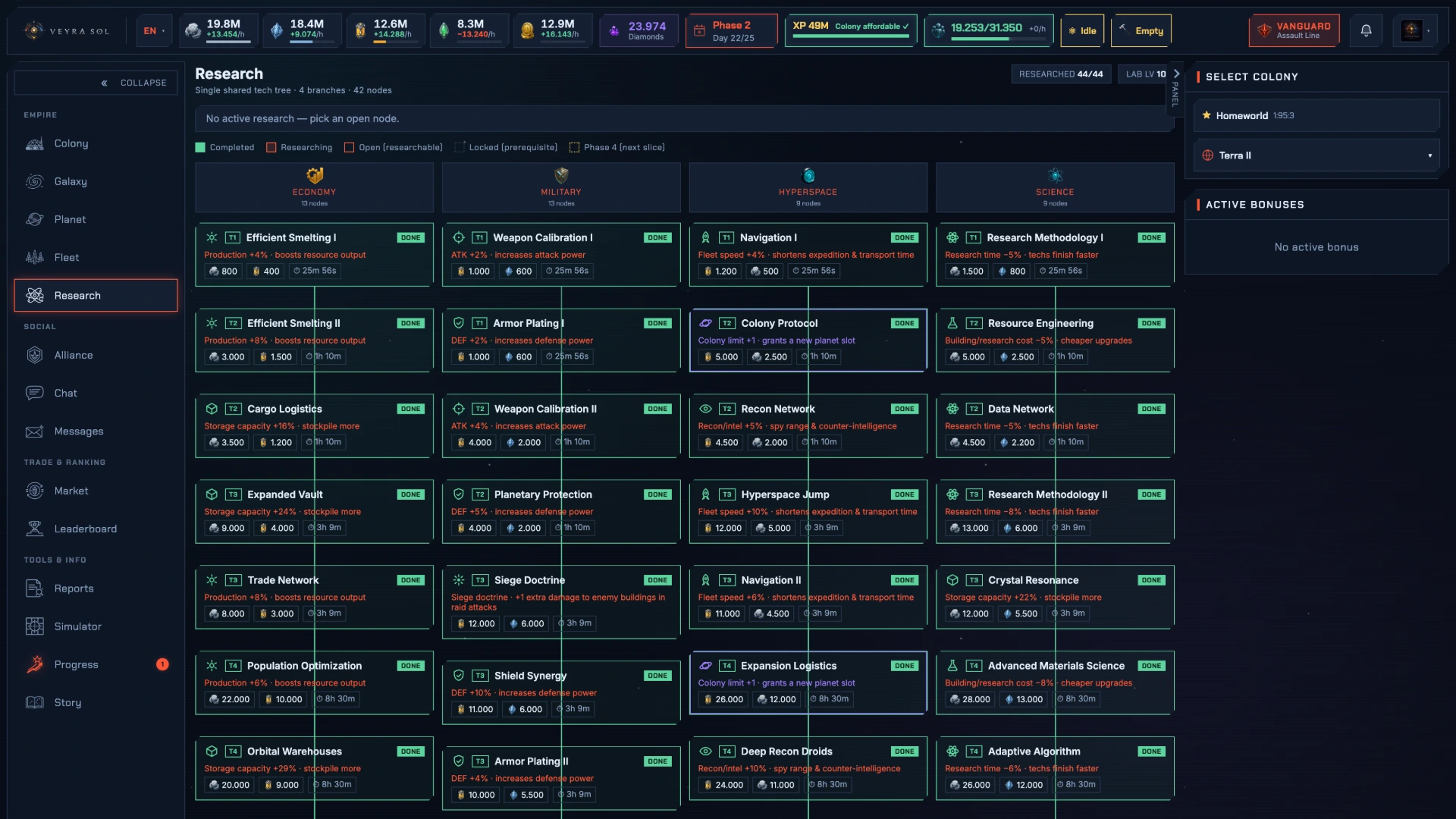
Economy
Sharpens yields, logistics and the worker pool that caps your output.
Military
Global combat bonuses and the path to apex units.
Hyperspace
Faster travel, more colonies, and the road to the Core.
Science
Deep tech — and the ancient secret of how to light the Beacon.
Two keys gate the endgame: Hyperspace’s “Core Sector Access” and Science’s “Wonder Pre-Research” — the lost knowledge of how to ignite the Beacon.
08 /The Road to Victory
No one wins alone
The Galactic Beacon is the season’s most expensive structure — a multi-week coalition project that can only be raised in the Core. Lighting it takes a Trinity, and holding the Trinity together is the whole endgame.
A Trinity coalition
Victory needs at least one commander from each of the three factions, each having completed a Level-10 Beacon, with the Trinity intact at the finish. No single faction or mega-alliance can win alone.
Or the Closest Coalition
If no one finishes by day 120, the “Closest Coalition” ranking decides the season.
Spoilers, not destroyers
A weaker player can knock a Beacon down to delay victory — buying time — but can never destroy it outright.
Then the reset
The galaxy resets for a new Ignition Cycle. Only glory carries over — cosmetics, titles, achievements — never power.
04 — Be First to Relight the Beacon
Pre-register
Be there when the Veyra Spiral wakes again. Join the commanders who see the Beacon’s first light — we’ll notify you the day it launches.